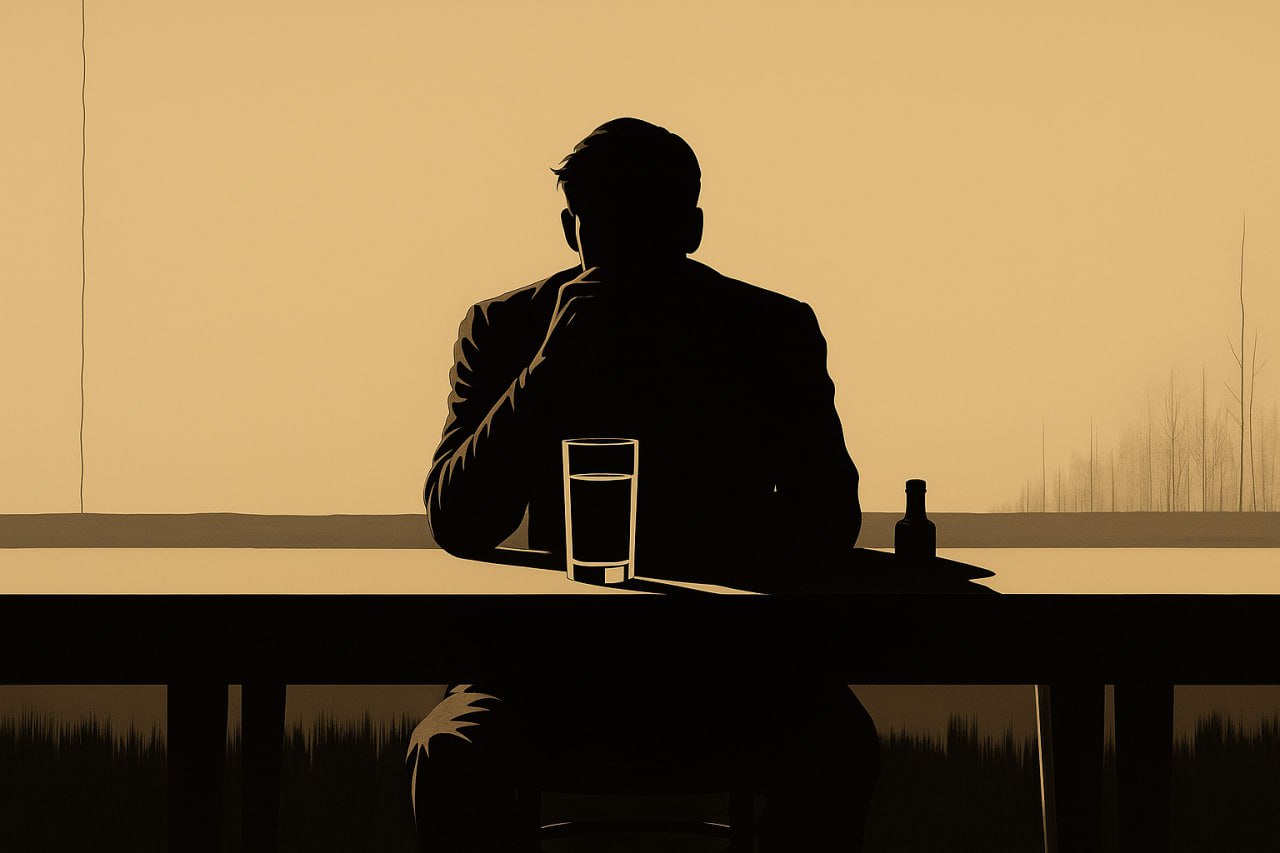
The central question is not whether art should be political, but rather what kind of relationship art establishes with power at the level of the collective unconscious. Art does not merely produce beauty; it produces ways of seeing. It organizes desire, shapes memory, and teaches us whom to recognize as a subject and whom to reduce to an object of visual consumption. Therefore, when we argue that contemporary art should not reproduce the discourse of past domination, the issue is not only a political critique of power. It is also a psychoanalytic critique of the mechanisms through which domination persists in vision, language, imagination, and aesthetics. As the original text emphasized, domination is not located solely in government or formal institutions; it is reproduced through language, the gaze, education, aesthetics, and collective imagination.
From a Freudian perspective, what has not been understood, mourned, and symbolically worked through tends to return and repeat itself. A society, like an individual subject, may reproduce its violent past in new forms if it cannot confront that past psychically and symbolically. This may be described as the unconscious repetition of domination. In such a condition, art may appear modern, beautiful, or even critical, while at a deeper level it continues the same old relation: one side sees while the other is seen; one side gives meaning while the other becomes the object of meaning; one side speaks while the other is represented in silence.
Here, the concept of repetition compulsion becomes crucial. Freud demonstrates that the subject sometimes repeats unresolved experience instead of remembering, understanding, and working through it. At the social level, if the history of domination is not analyzed, it may return in the form of images, nostalgia, aesthetic pleasure, heroic narratives, and grand representations. For this reason, representing the past is not in itself dangerous; what is dangerous is the reproduction of the logic of the past. Art can summon the past in order to understand it, but it can also aestheticize that same past without critique and reinject it into collective desire.
Another central issue is the gaze. In a Lacanian reading, the gaze is not merely the act of seeing; it is a position occupied by the subject in relation to the Other and to power. Domination operates through the gaze because it determines who is seen, how they are seen, and who is denied the possibility of being seen at all. When art represents the body of the woman, the migrant, the poor, the child, the victim, or the minority without granting them speech, agency, or subjecthood, it turns them once again into objects of the gaze. In this case, even if the work is thematically concerned with suffering or justice, its psychic structure remains organized around domination.
From this perspective, the fundamental question about a work of art is not simply “What is it about?” but rather “What relation does it construct?” Does the work return the excluded subject to the position of a speaking subject? Or does it merely present their suffering for aesthetic consumption? Does the image of the woman, the people, the victim, or the oppressed move them beyond passivity? Or does it once again stabilize their historical position as silent, wounded, dependent, and waiting to be saved?
At this point, art may become not a critique of domination, but its beautification. Power does not operate only through repression; it may also present itself through grandeur, order, beauty, paternal authority, heroism, and rescue. From a psychoanalytic perspective, such imagery is connected to the ego ideal. A wounded society may seek a fantasy of security and wholeness in the image of the king, the leader, the hero, the unified nation, or the paternal savior. In this condition, art does not merely represent power; it produces the possibility of identification with power.
This point is particularly important in the analysis of political art. Sometimes a work appears to be about “the people,” yet the people are represented only as a faceless mass, while meaning is concentrated in the face of the hero, leader, or savior. Sometimes a work is ostensibly about the victims of violence, yet the victims remain voiceless and power remains the owner of the narrative. Sometimes a work is about the past, yet it glorifies that past so intensely that its hidden violence—patriarchy, class exclusion, gendered repression, colonialism, obedience, and humiliation—disappears from view. This is the moment when art becomes nostalgia for domination.
Freud’s “Mourning and Melancholia” is especially useful here. Confronting loss requires psychic work. A society, too, must be able to mourn its past: to understand it, create distance from it, name its violence, and prevent the lost object from returning in idealized form. When this work of mourning does not take place, the past returns melancholically: idealized, glorious, untouched, and sacred. Nostalgic art becomes dangerous precisely at this point, because instead of analyzing loss, it transforms it into a magnificent image.
Therefore, if contemporary art is to be taken seriously in its modern and critical sense, it must distance itself from this mechanism. Contemporary art should not merely represent the past; it must expose the psychic mechanism through which the past becomes desirable. It must show why a society repeatedly returns to the image of the authoritarian father, order from above, the heroic savior, the silent female body, the voiceless victim, and the faceless people. Critical art does not only change content; it changes the position of the gaze.
In this sense, popular art is not necessarily simple, slogan-based, or mass-oriented art. Popular art is art that returns the lived experience of the excluded to the field of visibility and speech. It is art that removes the image from the monopoly of the court, the state, capital, media, ideology, and the dominant gaze. At the psychoanalytic level, the popular character of art means breaking the subject/object relation: the other is no longer merely the object of my gaze, but becomes the bearer of gaze, voice, memory, and narrative.
Here, the concept of sublimation is also useful. Freud understands art as one of the pathways through which instinctual energy is transformed into cultural form. Yet sublimation is not always emancipatory. Drive can be transformed into poetry, image, and music, but this transformation may serve either revelation and liberation or the aestheticization of violence and obedience. Therefore, a work of art is not critical simply because it is artistic. The question is where this sublimation directs desire: toward thought, confrontation, and mourning, or toward denial, identification with power, and pleasure in the suffering of the other?
At the collective level, domination-oriented art also produces a form of collective narcissism. Society conceals its wounds, failures, and losses within an idealized image of itself. The magnificent image of the past or the heroic image of the savior allows society to avoid confronting its historical anxiety. In this condition, art becomes a mirror that reflects not truth, but the fantasy of wholeness. Society sees itself in that image as great, pure, victimized, righteous, or redeemed, without assuming responsibility for its internal violence and exclusions.
Against this condition, critical art is not a calm and beautiful mirror; it is a broken mirror. Critical art does not aim to soothe the viewer, but to disturb their secure position. It reveals that the viewer’s gaze is not neutral, that their aesthetics are not innocent, that their nostalgia is not harmless, and that their visual pleasure may be connected to domination. Such art does not simply offer something to be seen; it transforms the act of seeing itself into a question.
Thus, contemporary art should not reproduce the discourse of past domination because domination does not persist in the unconscious only through command and law. It also persists through image, desire, beauty, nostalgia, identification, and silence. If art fails to recognize these mechanisms, even when it speaks of freedom and the people, it may in practice reconstruct the same old relation of power.
The psychoanalytic conclusion, therefore, is this:
Contemporary art becomes truly critical and contemporary when it exposes not only the subject matter of domination, but also its psychic form. It must show how power educates the gaze, how it makes suffering consumable, how it idealizes the past, how it turns bodies into objects, and how, through the image, it keeps alive the desire for obedience or identification with power. The task of contemporary art is not to decorate the memory of domination, but to break with its unconscious logic.
Suggested Theoretical Sources
Sigmund Freud, Beyond the Pleasure Principle — for the concept of repetition compulsion.
Sigmund Freud, Mourning and Melancholia — for the analysis of mourning, loss, and the melancholic return of the past.
Sigmund Freud, Group Psychology and the Analysis of the Ego — for understanding collective identification, the leader, the ego ideal, and mass psychology.
Sigmund Freud, Civilization and Its Discontents — for the relation between culture, repression, drive, and social order.
Jacques Lacan, The Four Fundamental Concepts of Psychoanalysis — for the concepts of the gaze, the object, and the position of the subject within the field of vision.
Laura Mulvey, “Visual Pleasure and Narrative Cinema” — for the critique of the dominant gaze and the objectification of the female body.
Walter Benjamin, “The Work of Art in the Age of Mechanical Reproduction” — for the relation between art, politics, reproduction, and the appropriation of the image.
Theodor W. Adorno, Aesthetic Theory — for the relation between modern art, critique, and resistance to cultural consumption.
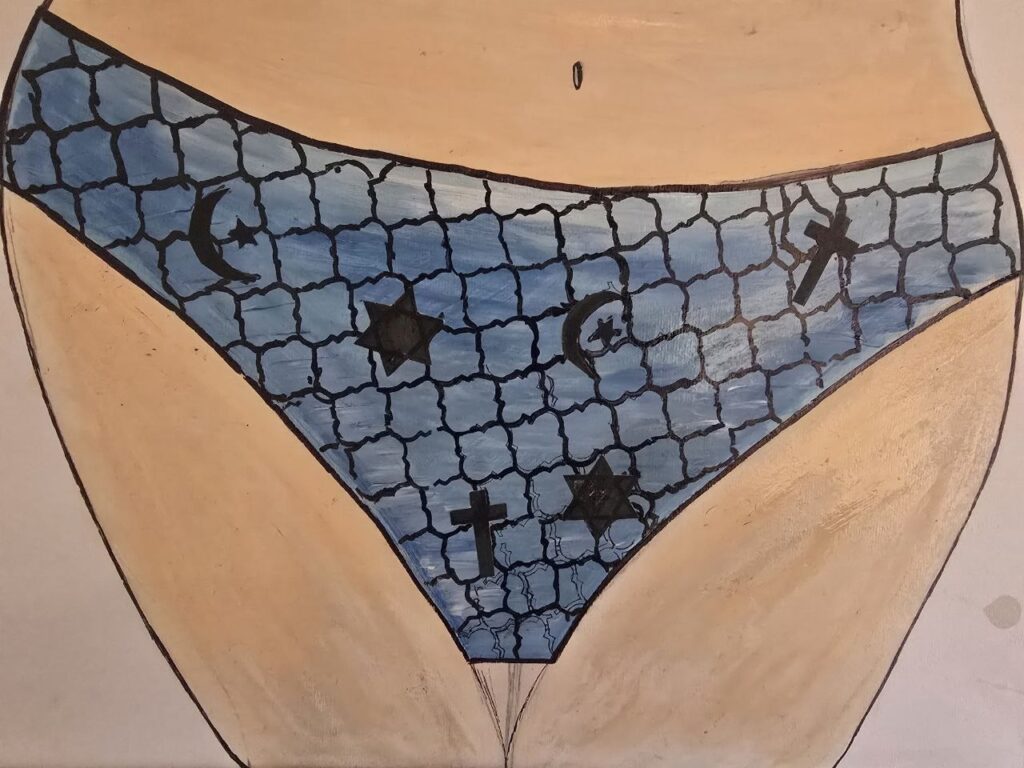
The Sacred Cage